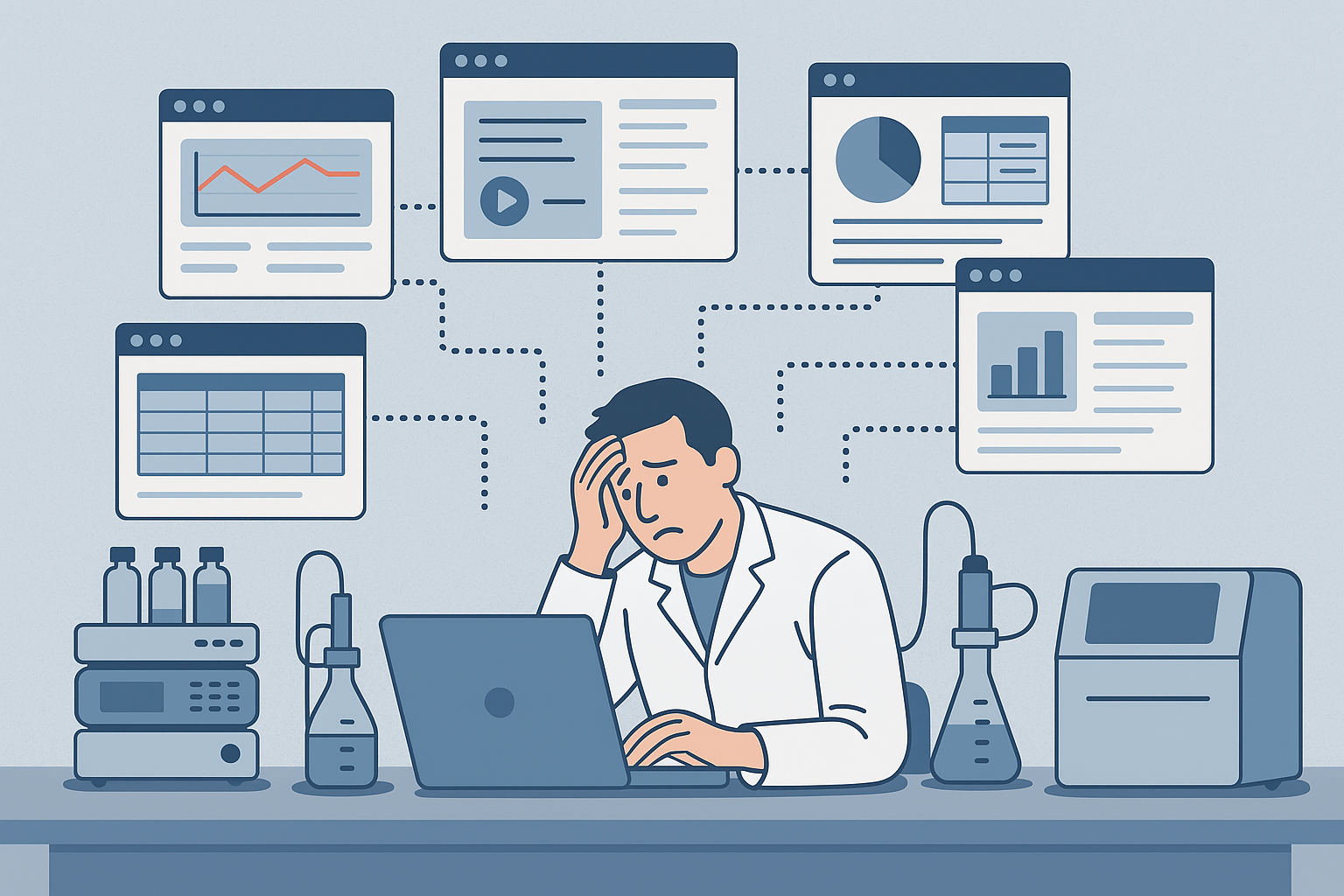
One of the biggest challenges in lab digitalization is connecting a wide range of instruments and IT systems. This is where middleware plays a key role. In the context of laboratory digitalization, middleware acts as a bridge between lab equipment/instruments and digital platforms like LIMS, SDMS and ELNs.
What is Middleware?
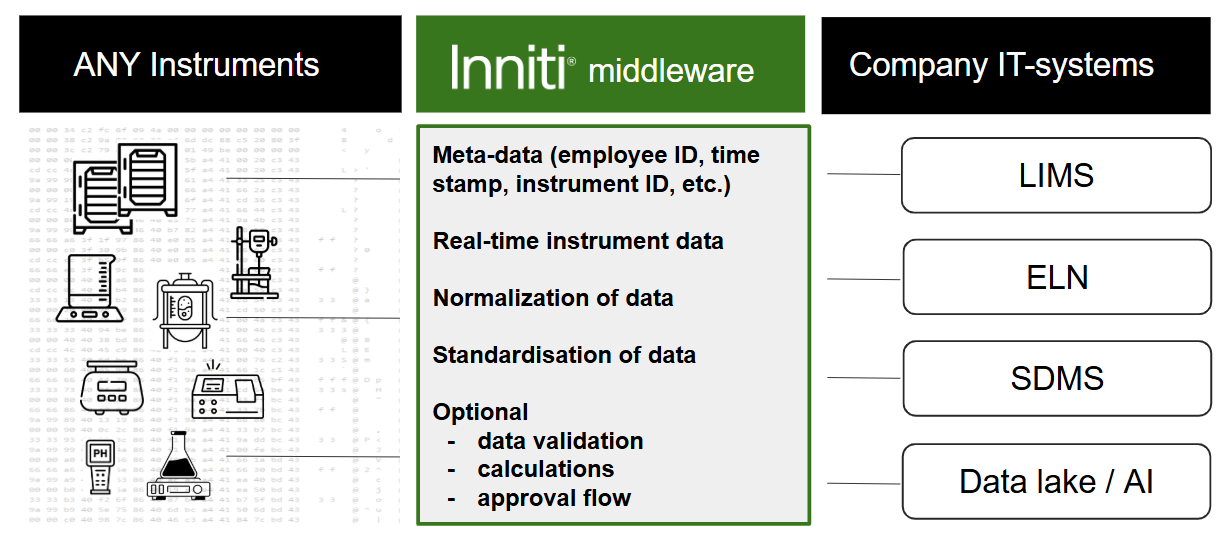
Middleware is a software layer that collects data from multi-brand lab instruments and transfers it to other systems in a standardized, automated way. It ensures different devices and platforms can “talk” to each other, even if they use different data formats or protocols. This eliminates manual data entry and reduces errors — i.e. improves data quality, integrity and reliability.
Why Labs Need Middleware
Most labs use equipment from different manufacturers, often without built-in connectivity. Without middleware, integrating these devices into digital systems is time-consuming and prone to mistakes. Middleware solves this by enabling real-time data transfer, logging, and system integration — a foundational step for automation and compliance.
Inniti = Middleware
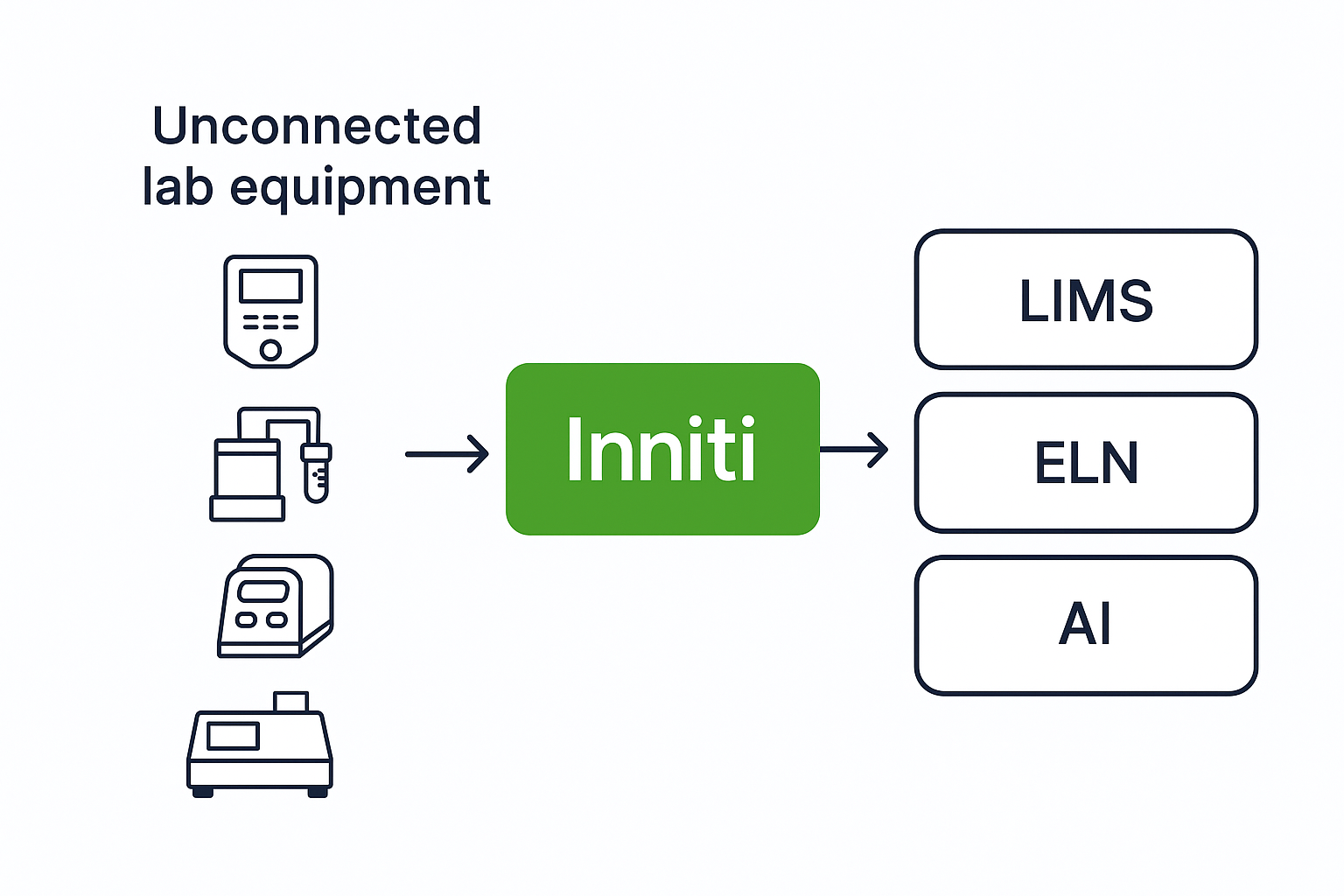
Inniti connects the instruments and extracts the data in multiple ways depending on the instrument’s connectivity capabilities. Inniti also captures and logs user data, time, instrument number, etc. (metadata). All data and log files are normalised, standardised — and, if required, validated — in Inniti’s platform and transferred to any existing LIMS, ELN, SDMS or data lake (AI) via Inniti’s API.
Reflection
Middleware is essential for turning disconnected lab instruments into part of a unified digital ecosystem. Solutions like Inniti help labs implement this connectivity, enabling more efficient, accurate, and scalable operations. Middleware is not a luxury — it is the foundation of a truly smart, data-driven lab.